
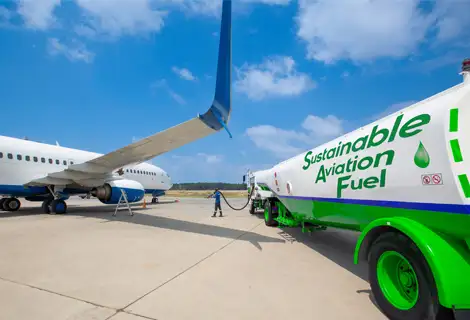
Sustainable Aviation Fuel (SAF) is produced from renewable feedstocks using refining processes adapted to convert biological materials and renewable energy into hydrocarbons suitable for aviation use.
Among these pathways, the Hydroprocessed Esters and Fatty Acids (HEFA) route is the most widely implemented commercially. Via this technology, SAF and renewable diesel are produced through hydroprocessing pathways that transform lipid-based feedstocks into drop-in fuels compatible with existing infrastructure
The HEFA Process: From Renewable Feedstock to Jet Fuel
The HEFA pathway converts renewable feedstocks such as used cooking oil (UCO), animal fats, and vegetable oils into renewable fuels through a sequence of catalytic steps.
Step 1: Contaminant removal
Renewable feedstocks contain contaminants including metals, phosphorus, and other impurities. These must be removed using dedicated grading materials and guard bed catalysts to protect downstream catalysts, maintain activity, and ensure stable unit operation. This step is essential due to the variability and impurity content of bio-based feedstocks.
Step 2: Hydrotreating (Oxygen Removal)
Hydrotreating removes oxygen from feedstock molecules using hydrogen in the presence of a catalyst. the hydrodeoxygenation, reaction converts triglycerides and fatty acids into paraffinic hydrocarbons at optimal yields, while decarboxylation, and decarbonylation are to be avoided. Finally, nitrogen-containing compounds are to be removed to prevent their negative impact on the downstream hydroisomerization catalyst.
Ketjen provides hydroprocessing catalysts used in this application, including:
- ReNewFine™ 100, 200 and 300 series designed for contaminant removal, hydrodeoxygenation and hydrodenitrogenation respectively in both 100% HVO and co-processing applications.
- ReNewFine™ 102, a guard bed catalyst with unprecedented uptake capacity for phosphorus and metals.
- ReNewFine™ 204, designed for optimal selectivity towards hydrodeoxygenation.
Step 3: Hydro isomerization
Following hydrotreating, the resulting paraffins must be upgraded to meet jet fuel specifications, such as boiling range, freeze point and density. Selective hydro isomerization introduces branching to improve low-temperature performance and achieve the required fuel properties, while some selective hydrocracking takes place to maximize SAF-yields. The ReNewFine™ 5000 series ofhydroisomerization catalysts enables optimum SAF-yields at unrivalled stability.
The ReNewFine™ catalyst portfolio supports both hydrodeoxygenation and hydroisomerization steps required for producing aviation fuel-range hydrocarbons.
The upgraded hydrocarbon stream is separated into product fractions. The jet fuel fraction is isolated and blended to meet aviation fuel specifications, while other streams such as renewable diesel and naphtha may also be produced depending on process configuration.
Reactor Design and Process Optimization
In addition to catalyst selection, reactor configuration plays an important role in renewable fuels processing. The way catalysts are loaded and arranged within a reactor can impact performance, stability, and cycle length.
RenewSTAX™ refers to optimized reactor loading configurations specifically developed for renewable fuels applications. These designs are used to support catalyst performance across varying feedstocks and operating conditions, while enabling integration of renewable processing within existing refinery units.
Proven Experience in Sustainable Fuels Production
Ketjen provides catalyst solutions used in the production of renewable diesel and Sustainable Aviation Fuel. Its ReNewFineTM hydroprocessing catalyst portfolio is designed to convert bio-based feedstocks, including used cooking oils and animal fats, into transportation fuels within refinery infrastructure.
These solutions support feedstock conversion, product quality, and operational stability across a range of renewable feedstocks. With more than 20 years of commercial experience in renewable fuels processing, Ketjen supports refiners in integrating alternative feedstocks and meeting renewable fuel requirements.
Advanced Renewable Fuel Pathways
In addition to HEFA, Ketjen is involved in the development of technologies supporting next-generation SAF pathways, including alcohol-to-jet, lignocellulosic bio-oil upgrading, and municipal solid waste conversion. These pathways are part of ongoing industry development in renewable fuels.
Ketjen’s Role in SAF and Renewable Fuel Production
Ketjen supports SAF production through catalyst technologies and refinery expertise applied across hydroprocessing units, with solutions designed to enable the conversion of renewable feedstocks into transportation fuels within existing refinery infrastructure.
This includes hydroprocessing catalyst systems, renewable feedstock integration, and technical service to support unit performance and optimization. Ketjen also shares technical insights and industry perspectives through its published articles and resources.
From Renewable Feedstock to Aviation Fuel
Sustainable Aviation Fuel production is built on established hydroprocessing technologies adapted for renewable inputs.
Each stage of the HEFA process – from pretreatment through upgrading – depends on catalyst performance to enable efficient conversion, product quality, and operational reliability.
Ketjen’s ReNewFine™ catalyst portfolio and RenewSTAX™ reactor loadings support these processes within refinery environments used to produce SAF, while ongoing development of advanced pathways continues to expand future production possibilities.