
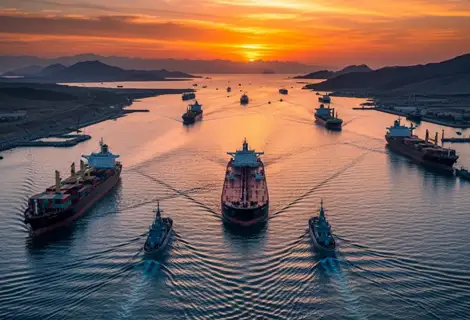
The disruption at the Strait of Hormuz is more than just an oil news story; it’s a shock to petrochemical feedstocks that is quickly tightening the propylene supply in Northeast Asia and transforming the market landscape. Ketjen’s Strategic Marketing Director, Leonard Chan, offers his insights into how the closure of the Strait is impacting both the propylene market and the refining sector.
Q: Geopolitics rarely rewrites chemical economics overnight, but the Strait of Hormuz just did. From your perspective, what changed?
What really changed is where the stress shows up. For a long time, propylene markets in Northeast Asia were shaped by capacity additions: first PDH units, then new naphtha crackers in China. That created oversupply and weak margins. The Hormuz disruption flips the problem. It shifts the focus from demand and capacity to feedstock access and cost. Suddenly, logistics and trade routes matter as much as nameplate capacity.

Q: Why does feedstock exposure matter so much for propylene today?
If you look at commercial data on trade flows, China’s propylene system has become increasingly dependent on imported feedstocks, especially propane and naphtha sourced from the Middle East. That wasn’t always the case. But trade tensions changed sourcing patterns, and now there’s a concentration risk. When Hormuz is disrupted, this isn’t theoretical. It directly tightens feed availability and pushes costs higher for onpurpose propylene production.
Q: Northeast Asia has lived with weak propylene economics for years. Why does this disruption matter now?
Because it changes who sets the marginal price. In an oversupplied market, lowcost producers dictate pricing. But when feedstock costs spike, highcost marginal producers suddenly matter again. PDH units are a good example. They’re extremely sensitive to propane prices. When propane becomes scarce or expensive, PDH cash costs rise quickly, and some capacity becomes uneconomic. That creates a shortterm tightening effect, even in a structurally long market.
Q: How exposed is China’s PDH sector in this environment?
Quite exposed. Earlier, many PDH operators relied heavily on US propane. As tariffs came into play, sourcing shifted. Today, a large share of imports come from the Middle East. That concentration works fine when logistics are smooth, but it becomes a vulnerability when shipping routes are disrupted. The result is a rapid escalation in operating costs and a reassessment of which units should run and which shouldn’t.

Q: Does this create opportunities elsewhere in the system?
Yes, particularly for refineryintegrated propylene. When on purpose propylene becomes expensive, refinerybased propylene regains strategic value. FCC units that are designed or operated to maximize propylene suddenly look much more relevant. This isn’t about longterm structural change; it’s about short-term flexibility and who can respond fastest.
Q: What’s the broader takeaway for the refining–petrochemical complex?
For me, the big lesson is resilience. Over the last decade, the industry optimized for efficiency, scale, and cost. That made sense. But events like this remind us that feedstock diversity, logistics exposure, and operating flexibility matter just as much. Propylene isn’t just a chemical; it’s a system that links geopolitics, trade flows, and refinery configuration. When one of the parts breaks, the whole system reprices.
Q: How should practitioners think about this going forward?
I’d say don’t underestimate second order effects. Even temporary disruptions can change behavior, how operators run units, how traders price risk, and how companies think about feedstock strategy. The market will eventually rebalance, but the experience leaves a mark. In propylene, flexibility isn’t a nicetohave anymore. It’s a strategic advantage.
How is feedstock exposure and flexibility reshaping propylene economics in your region? Let us know by joining our LinkedIn conversation.