
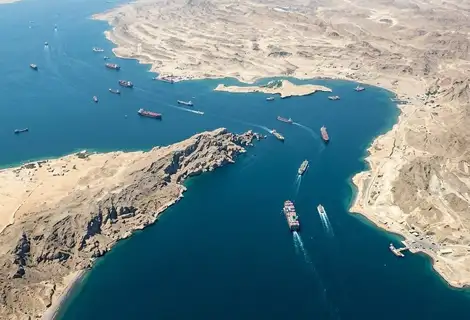
The closure of the Strait of Hormuz represents one of the most consequential disruptions to global energy markets in decades. Much of the initial attention has been focused on crude oil, but commercial data on refined‑product trade flows tell us that the most immediate and structural impact is on transportation fuels, particularly diesel and gasoline.
And, while the planned ceasefire will bring some near‑term relief, a rapid return to normal conditions is unlikely. Vessel backlogs and damage to critical infrastructure mean the disruption is expected to persist for an extended period. Ketjen’s Vice President and General Manager, FCC, David Leach shares his insight on the transportation fuels market, price controls, and how refiners can still create value.
Q: The closure of the Strait of Hormuz has dominated energy headlines. From a refining perspective, what matters most right now?
Commercial data on refined‑product trade flows tell us that this disruption is more than a crude oil story. It’s also a transportation fuels story. The Middle East plays a critical role as an exporter of both gasoline and diesel, but diesel is the more exposed product. Export volumes are larger, demand is less flexible, and alternatives are harder to mobilize quickly. When those flows are disrupted, diesel markets tighten faster than gasoline markets, and prices respond accordingly.
Q: We’ve seen diesel prices rise faster than gasoline. Why is that divergence so pronounced?
It comes down to structure. Diesel demand is tied to freight, agriculture, construction, and industrial activity—areas where consumption doesn’t fall easily when prices rise. Gasoline demand is broader but more elastic and more regionally supplied. When export‑linked diesel supply is disrupted, the market feels it immediately. That’s why diesel pricing tends to move first and further in these situations.
Q: Governments have responded with price caps and price‑control mechanisms. How does that change refinery economics?
Price caps are designed to protect consumers, but they fundamentally change how value is created. When refiners can’t fully realize higher market prices for gasoline or diesel, margins get compressed. In that environment, value creation shifts upstream—from pricing at the pump to optimization inside the refinery. Yield structure, flexibility, and operational choices suddenly matter more than headline prices.
Q: What does that mean in practical terms for FCC operators?
The FCC is one of the most flexible units in the refinery, and that flexibility becomes critical under price controls. Operators can focus on three things. First, maximize products that are not subject to price caps—such as LPG or propylene, depending on the market. Second, minimize production of low‑value or constrained products, especially when feedstock costs are high. Third, when diesel economics dominate gasoline economics, shift the FCC toward higher Light Cycle Oil or LCO production.
Q: Why is LCO so important in the current environment?
When diesel prices are stronger than gasoline prices, LCO becomes a key value lever. Even under price controls, the relative value of middle distillates improves. FCC operators that can selectively increase LCO yield are better positioned to capture that value. This is where operating severity, catalyst choice, and additive strategy all come together.
Q: What operational or catalyst factors enable higher LCO production?
At a high level, it’s about controlling severity and selectivity. Lower severity reduces overcracking of middle distillates. Catalysts with high accessibility and an optimized balance between zeolite and matrix help crack heavier molecules efficiently without destroying LCO. Bottoms‑cracking additives also play an important role by upgrading heavy material into distillate‑range products rather than gasoline or gas.
Q: Stepping back, what’s the broader lesson for refiners?
We’re moving into a world where refining is increasingly shaped by security concerns and policy intervention, not just demand curves. In that environment, profitability isn’t determined by fuel prices alone. It’s determined by how well a refinery can adapt—how quickly it can shift yields, how effectively it uses its FCC, and how well it aligns operations with relative value. The opportunity is still there, but it’s created inside the unit, not at the pump.
Interested in discussing this further? Join our LinkedIn conversation here!